Steel sheet gong: how the parameters shape the sound
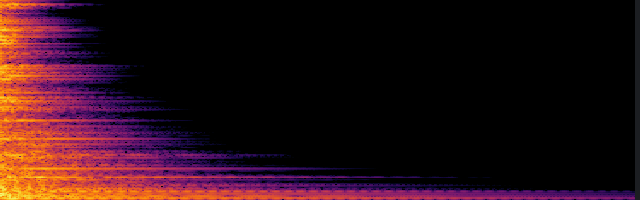
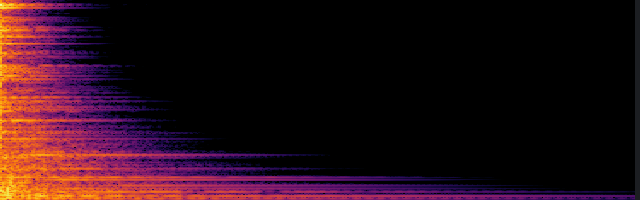
Each section varies one property of the simulated sheet or of the excitation while everything else stays at the simulator defaults: a 12 by 18 inch, 22 gauge (0.79 mm) stainless steel sheet hanging in portrait orientation with a 3 mm bow across its width, heard 1 m in front of its center, recorded for 4 s. The clips are computed with the simulator's default numerical settings (8 mm grid), so the 'Open in simulator' links reproduce them exactly. Click a player to hear a clip. Every clip is rendered at the simulator's default playback level (+20 dB relative to 1 Pa at full scale, with the same soft clipper), so loudness differences within and between sections are the ones the model predicts, and a clip sounds as it does in the app. The numbers under each clip are the peak pressure and sound pressure level at the listener, the RMS pressure over the clip, the spectral centroid of the sound between 0.2 and 1.2 s (a measure of brightness), and fitted 60 dB decay times of a low and a high band.
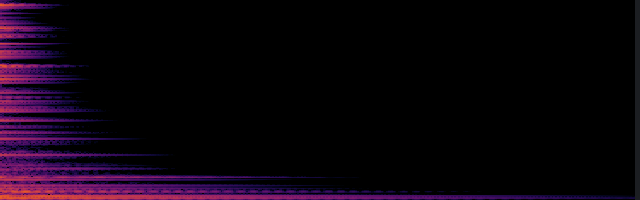
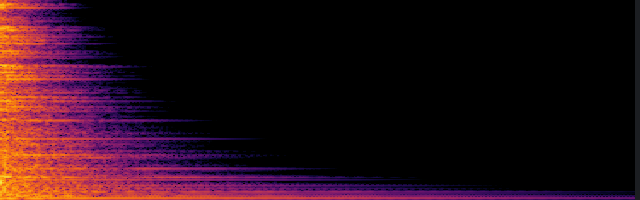
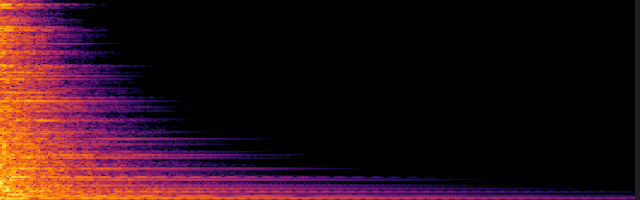
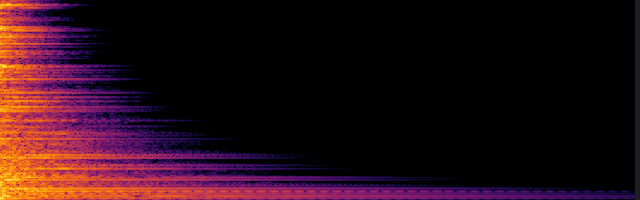
A wooden stick tip (30 g effective mass) strikes the sheet at 70 percent of its width and 35 percent of its height. Speed sets both the loudness and the character: the contact force grows with speed, the contact shortens, and more energy reaches the high modes. The sound grows brighter as well as louder.
Playback gain +20 dB relative to 1 Pa = 0 dBFS (the simulator's default is +20 dB); loud onsets are soft-clipped. Spectrograms: 0 to 5 kHz over the clip, 80 dB range, one color scale per section.
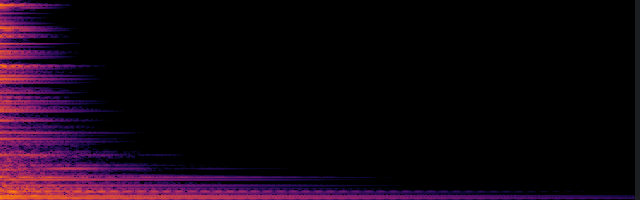
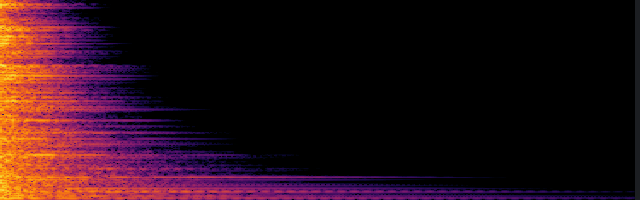
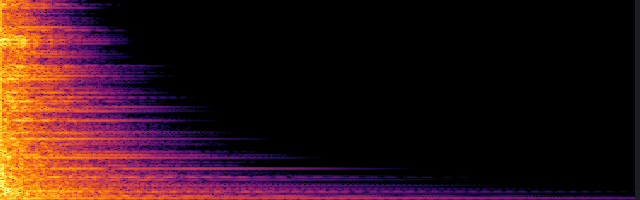
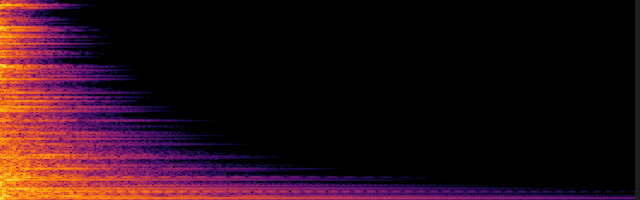
The same speed with a lighter or heavier stick. A heavier stick carries more momentum, stays in contact longer, and pushes the sheet further, which favours the low modes; a light stick gives a short, bright tap.
Playback gain +20 dB relative to 1 Pa = 0 dBFS (the simulator's default is +20 dB); loud onsets are soft-clipped. Spectrograms: 0 to 5 kHz over the clip, 80 dB range, one color scale per section.
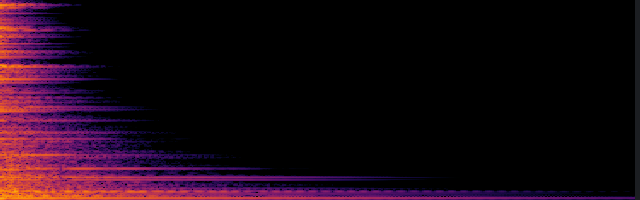
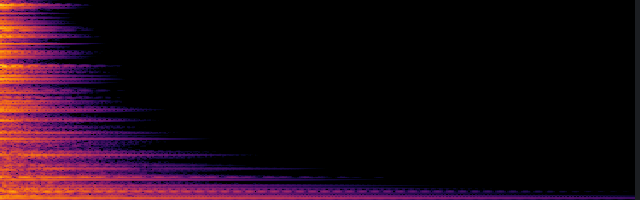
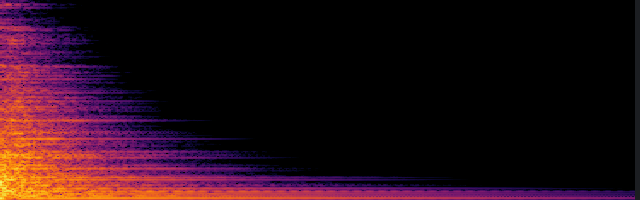
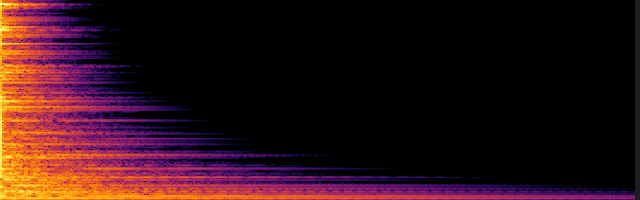
The Hertz contact stiffness K stands for the hardness of the tip: a soft (rubber or felt) tip has a low K and a long, gentle contact that excites mainly the low modes; a hard tip (dense wood, or a metal beater) has a high K and a sharp click.
Playback gain +20 dB relative to 1 Pa = 0 dBFS (the simulator's default is +20 dB); loud onsets are soft-clipped. Spectrograms: 0 to 5 kHz over the clip, 80 dB range, one color scale per section.
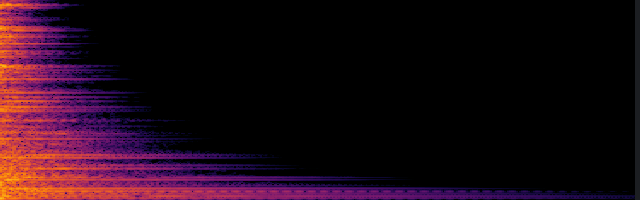
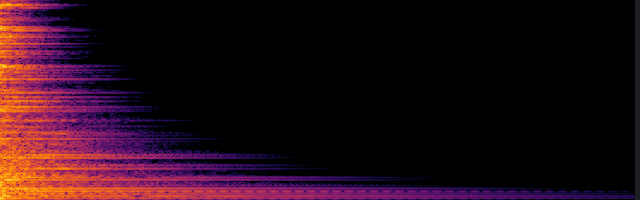
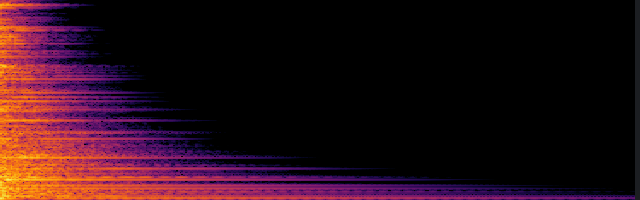
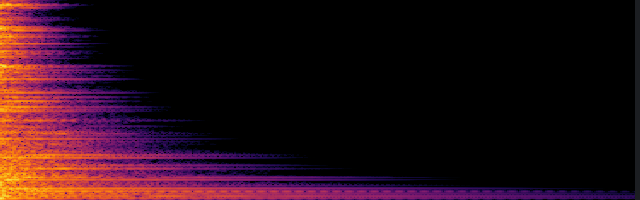
Where the sheet is struck decides which modes are excited: a strike at the center excites only modes that are symmetric about both axes, while a strike near an edge or a corner excites the twisting and edge modes as well.
Playback gain +20 dB relative to 1 Pa = 0 dBFS (the simulator's default is +20 dB); loud onsets are soft-clipped. Spectrograms: 0 to 5 kHz over the clip, 80 dB range, one color scale per section.